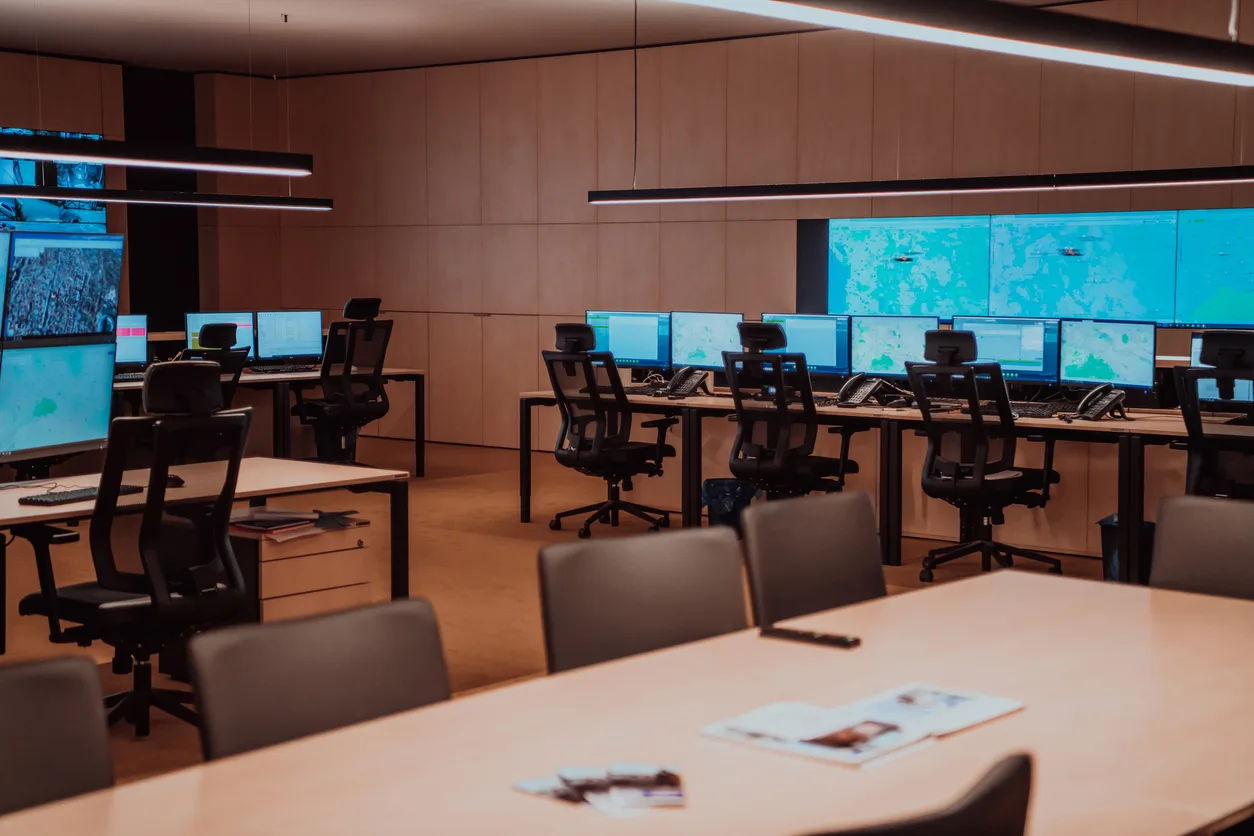
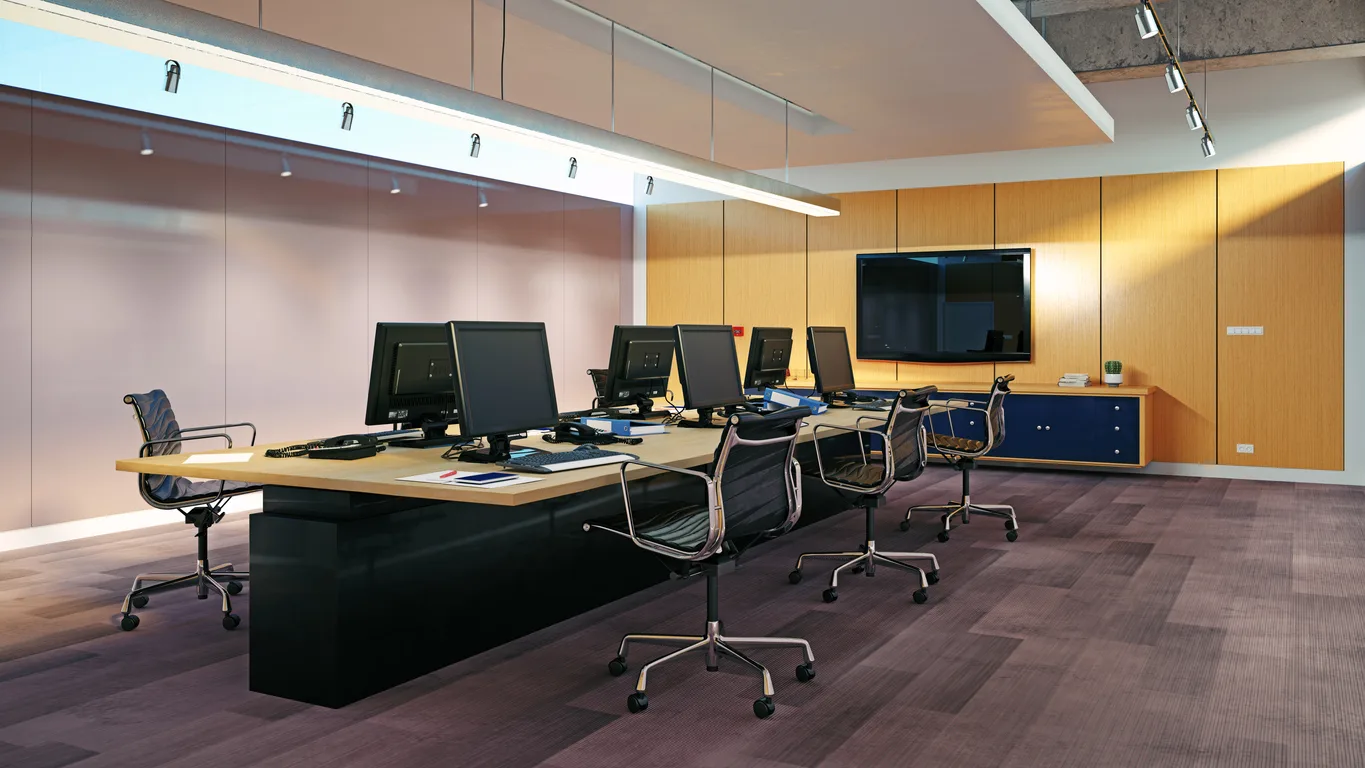
A confidential client involved in secure communications and classified information sought to integrate advanced acoustic design strategies into their architectural and engineering plans to provide high levels of sound isolation. The facility’s secure nature and technical complexity demanded precise control of interior sound conditions, particularly in spaces where confidentiality, comfort, and integrated audiovisual solutions were nonnegotiable. To address these needs, the client engaged RSG to provide expert acoustic input from early design through construction administration.
Leveraging our team’s expertise in acoustic and vibration mitigation, RSG collaborated closely with the client, client representatives, construction team, architect, and engineering teams to incorporate acoustic recommendations into the core of the design. This included strategic design input for managing interior noise levels, mitigating noise and vibration from building services systems, and ensuring continuity of design intent through submittal review and construction-phase coordination. RSG’s involvement helped the client meet exacting interior acoustic standards across both open-plan and enclosed work areas, demonstrating our ability to solve complex interior acoustic challenges in mission-critical environments.
The Challenge
Designing interior spaces for a secure operations facility presents distinct acoustic challenges. For this project, the difficulties were compounded by the need to accommodate a unified audiovisual experience, technical support functions, and secure communications within a confined building floor layout. The client needed a controlled acoustic environment between noise-producing spaces (e.g., equipment rooms), acoustically sensitive spaces (e.g., secure offices and conference spaces), and open-plan work areas. Each of these spaces had different requirements for sound isolation, background noise levels, and speech privacy.
A key concern was managing sound isolation between adjacent rooms without increasing the footprint of each partition assembly. Spaces intended for secure or classified use required stringent sound separation, while support spaces housing loud equipment posed concerns around noise intrusion and vibration transfer. In addition to maintaining minimal wall assembly thicknesses, the team also accounted for sound buildup and supported clear speech intelligibility across all work areas.
Coordination complexity added to the challenge. The acoustic performance would be shaped by partition assemblies and room finish treatments, while also having to accommodate the routing of audiovisual and building systems engineering services. To preserve the architectural vision while achieving acoustic goals, the project required early, detailed input from an experienced acoustics team capable of collaborating across disciplines.
RSG’s Solution
RSG provided targeted acoustic design input throughout the project’s design and construction documentation phases, focusing on solutions that balanced technical rigor with constructability. Recognizing the importance of early coordination, RSG engaged with the project’s architectural and engineering teams to develop and refine noise mitigation strategies integrated into the project’s design documentation. This included plan markups, sketches, and specification input.
Key to RSG’s approach was identifying potential concerns in acoustically sensitive areas early in the process. The team conducted a review of room adjacencies, calculated potential noise levels from mechanical systems, and provided acoustic input on architectural room finish treatments. Based on this analysis, RSG recommended bespoke construction assemblies to accommodate the high levels of sound isolation and speech privacy.
RSG also provided specific guidance on building services systems noise and vibration mitigation. This included the selection and placement of vibration isolation components for HVAC, electrical, and plumbing systems; design input on sound attenuators; and recommendations for duct and pipe wrapping to minimize airborne noise concerns. Where equipment sound levels were uncertain, the RSG team flagged areas requiring further review during the design phases so the team could assess collaboratively.
To support implementation, RSG issued annotated markups and detailed comments on plans and sketches, providing clear communication of acoustic priorities. Our team supported the construction administration phase by reviewing key submittals, ranging from sound-rated doors and seals to insulation and equipment vibration isolation products, to ensure that construction adhered to the original acoustic design intent.
Through this integrated approach, RSG helped the client maintain acoustic integrity across a complex project. The result was a facility that balanced security with meticulous attention to noise management, sound isolation, speech privacy, and user comfort. It achieved these goals without compromising design aesthetics or operational function.
Download a PDF