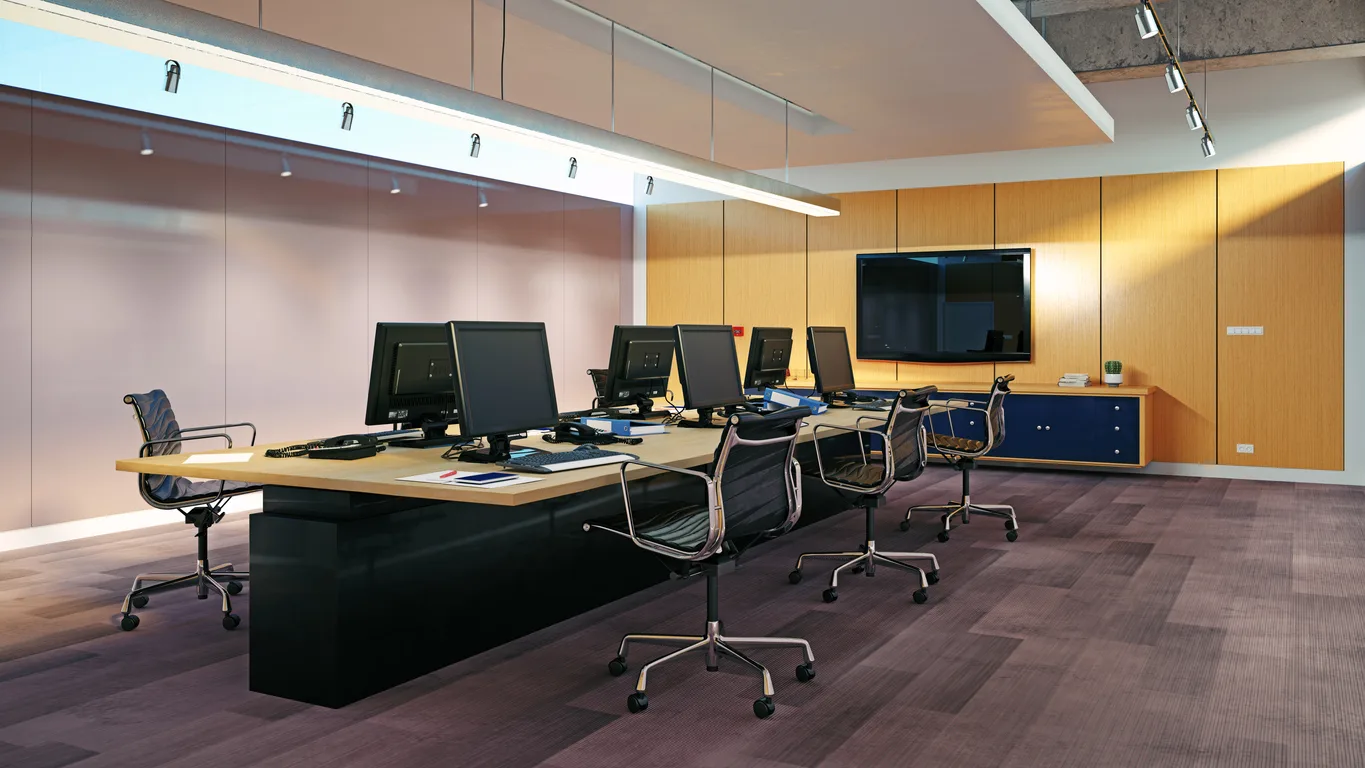
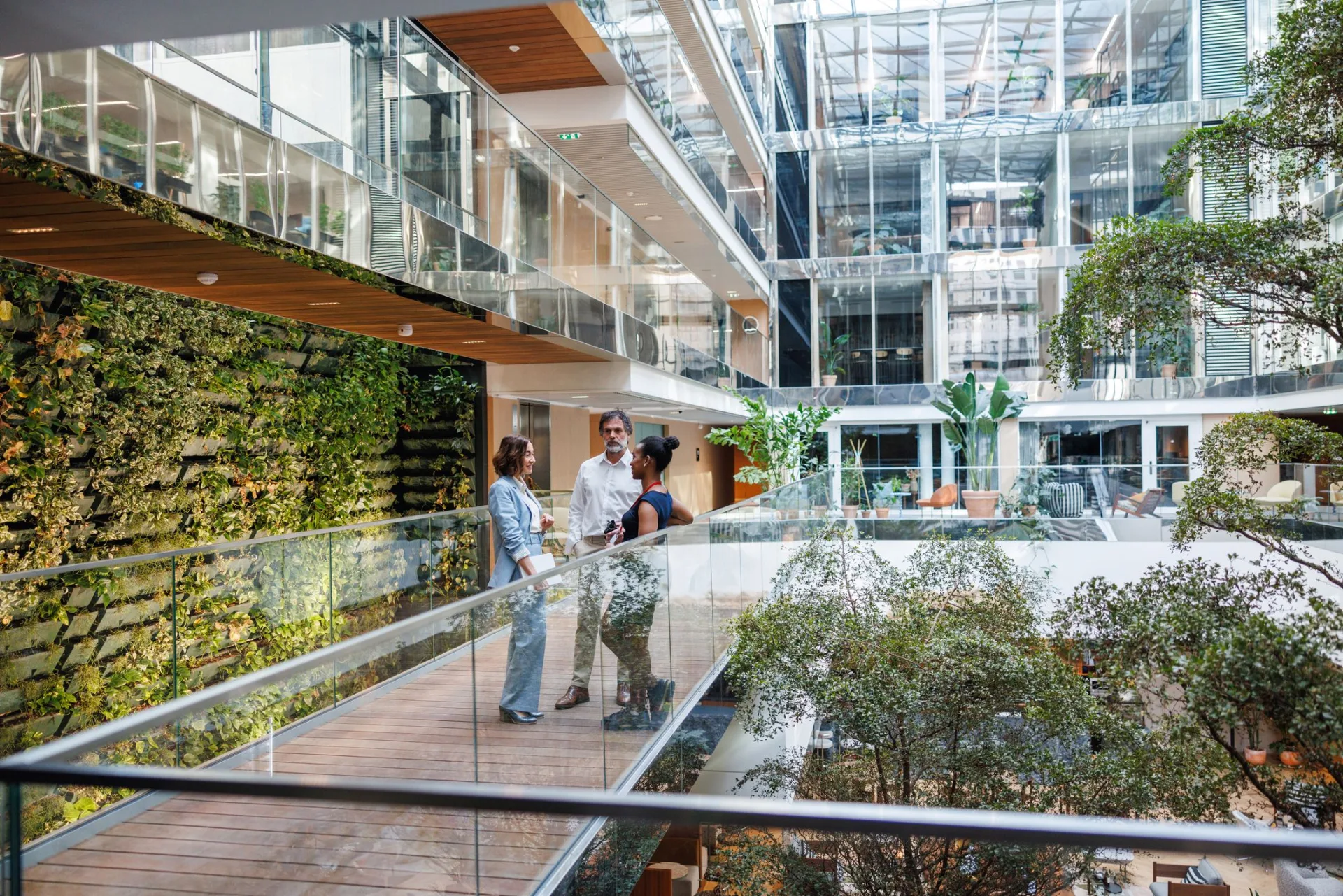
For an international consumer company focused on environmentally friendly household products, renovating its headquarters meant supporting a new way of working. Interior sound considerations became essential to the success of the design as the organization sought open, flexible work areas, shared collaboration zones, enclosed meeting rooms and phone booths, and a more connected central atrium. RSG helped shape an interior acoustics strategy for the company’s new headquarters that supported collaboration without sacrificing focus, speech clarity, or privacy, ensuring the renovated space both reflected the company’s values and functioned effectively for employees.
The Challenge
The company’s headquarters renovation centered on a transition to a fully Agile workplace, emphasizing openness, flexibility, and a greater variety of shared work settings. The company located workstations in open areas with minimal partitions and distributed collaboration zones, meeting rooms, and small phone booths throughout the space. The design also opened the building’s central atrium, visually and physically connecting floors and circulation areas to create a more dynamic workplace environment.
These design priorities introduced several acoustical considerations. Open work areas with limited barriers allowed conversations and activity noise to travel more easily, increasing the potential for distraction and reducing speech privacy. At the same time, enclosed meeting rooms and phone booths needed to support confidential discussions, even as glass elements and other architectural features introduced possible sound leakage paths. The atrium, central to the building’s openness and sense of connection, also had the potential to transmit sound between adjacent areas.
Creating a workplace that felt open and collaborative while still supporting focus and clear communication required careful attention to how sound would move through the environment. Achieving that balance required a coordinated acoustical strategy that addressed how sound would be absorbed, contained, and controlled throughout the workplace.
RSG’s Solution
RSG worked closely with the project team to develop an acoustical approach that supported the open workplace while maintaining a functional sound environment. Rather than relying on a single intervention, the team focused on acoustical performance across the different types of spaces within the headquarters: open work areas, enclosed rooms, and shared circulation spaces such as the atrium.
In the open office areas, RSG recommended increasing the amount of sound-absorbing materials to help control overall noise levels and reduce the distance conversations could travel. Our team prioritized ceiling treatments and other absorptive finishes to limit the buildup of background noise and create a more comfortable environment for focused work. These measures helped dampen sound energy in large, open spaces where partitions were limited and activity levels could vary throughout the day.
The building’s central atrium was another key consideration. Because the renovation intentionally opened this space to surrounding work areas, it had the potential to act as a pathway for sound to move between floors and adjacent zones. RSG evaluated how sound could propagate through the atrium and recommended strategies to introduce additional absorption and reduce the likelihood of noise carrying into nearby workspaces.
Enclosed meeting rooms and phone booths required a different acoustical approach. These spaces needed to support confidential conversations while still fitting within the project’s architectural vision, which included glass elements and lightweight partition systems. RSG provided guidance on improving sound insulation, including sealing potential gaps and coordinating door and partition performance, to help prevent sound leakage and improve speech privacy.
Together, these recommendations created a coordinated acoustical strategy that complemented the architectural design while addressing the practical needs of the workplace. By balancing sound absorption, sound containment, and room-to-room isolation, RSG helped ensure the company’s renovated headquarters could support collaboration, concentration, and clear communication across a wide range of work settings.
Download a PDF